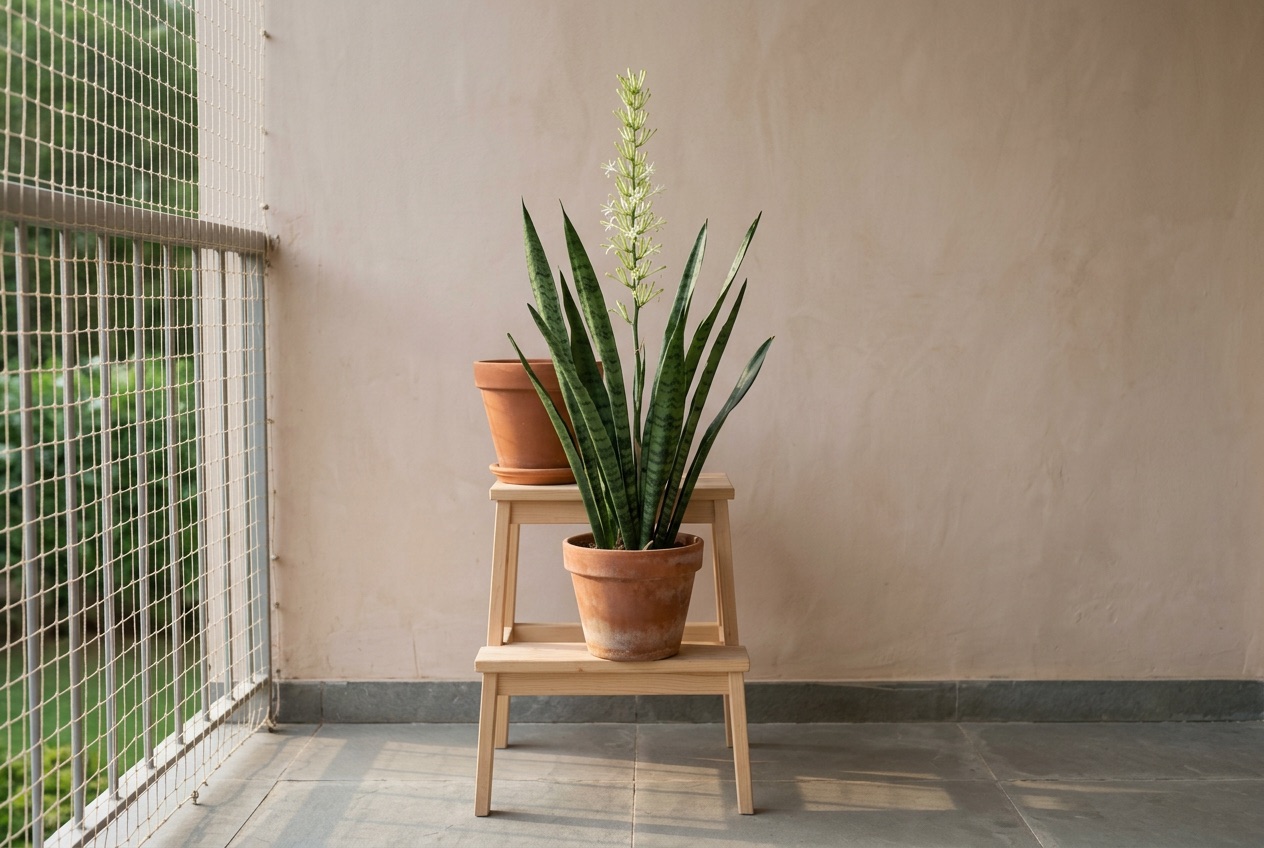
Snake plants flower when they reach maturity and experience conditions that trigger reproduction—usually a combination of being root-bound, receiving adequate light, or going through seasonal dry-then-wet cycles that mimic their native environment. The flowers are not a sign your plant is dying, despite what much of the internet claims.
Flowering is uncommon indoors because most homes lack the seasonal light variation and root restriction that prompt blooming in the wild. When it does happen, it means your plant is mature enough to reproduce, not that it's in crisis.
What Snake Plant Flowers Look Like
The flowers emerge on a tall spike (raceme) that grows from the base of the plant, separate from the leaves. Individual blooms are small, tubular, and typically creamy white or greenish-white. They open in succession from bottom to top over several weeks.
The scent is strong and sweet, most noticeable at night. Night scent of this kind is usually associated with moth pollination, though we have found nothing in our sources confirming that for this species. Some people find it pleasant; others find it cloying in enclosed spaces. The fragrance intensifies after dark.
Is Flowering Rare?
Indoors, yes—most snake plants never flower in typical home conditions. Outdoors in warm climates, NC State Extension notes that mature plants may produce flowers, an event that is rare for houseplants. Missouri Botanical Garden puts it in its bloom-time field as bluntly as a reference work can: "Rarely flowers indoors," and separately, "flowers and fruit rarely appear on indoor plants." Where it does happen, the season is spring.
The "rare" framing comes from indoor growers who've never seen it happen. In Florida and other subtropical zones where snake plants grow outdoors year-round, flowering is routine. The difference is light intensity, seasonal variation, and root restriction—all more pronounced outdoors.
Why Your Snake Plant Is Flowering
Three conditions commonly trigger flowering:
Root-bound status. When roots fill the pot completely, the plant interprets this as resource limitation and shifts energy toward reproduction. This is the most frequently cited trigger in cultivation and matches reader reports of flowering after years in the same pot.
Strong light exposure. Snake plants that spend summer outdoors or sit in bright indirect light indoors are more likely to flower. The Missouri Botanical Garden rates the species for part shade and notes that in low light the leaves come in darker and less variegated — a sign the plant is coasting rather than building reserves.
Seasonal dry periods followed by water. In native East African habitats, Dracaena trifasciata experiences distinct wet and dry seasons. A prolonged dry spell followed by resumed watering can mimic this cycle and prompt blooming. This is why some readers report flowers after a period of neglect.
None of these are distress signals in the sense of imminent death. They are environmental cues that reproduction is possible.
The "Stress Flowering" Myth
You'll find dozens of posts claiming snake plants only flower when stressed and trying to reproduce before dying. This conflates two separate plant behaviors.
Some species do exhibit "stress flowering"—a last-ditch reproductive effort when genuinely dying. Venus flytraps are a common example. The RHS puts it as "occasionally, sansevierias may produce starry white flowers on long thin stalks" — occasional, not exceptional, and framed as something a healthy mature plant does rather than a distress signal.rhs.org.uk/plants/sansevieria/growing-guide) confirms for outdoor cultivation in appropriate climates.
The confusion arises because the most common indoor trigger—being root-bound—is technically a form of mild stress. But it's chronic and manageable stress, not acute crisis. A root-bound snake plant can live for years and flower repeatedly. The flowers are not a distress flare.
Should You Let It Flower?
Yes, unless the fragrance bothers you. Flowering does not harm the plant or prevent future growth.
The spike will divert some energy from leaf production while it develops, but this is temporary. After the flowers fade, the plant resumes normal growth. Some growers report that certain cultivars, such as 'Fernwood Punk', seem to flower more readily indoors.
If you dislike the scent or want to redirect energy to foliage, cut the flower spike at the base once you've seen it. This causes no damage.
What Happens After Flowering
The flower spike dries and browns over several weeks. You can cut it off at any point—most people remove it once the blooms finish for aesthetic reasons.
The plant does not die after flowering. This is another myth borrowed from monocarpic species (plants that die after one flowering cycle, like agave). Snake plants are polycarpic and can flower multiple times across their lifespan.
Some readers report their plants flowering annually once they start. Others see it once and never again. The difference likely comes down to whether the triggering conditions—root restriction, light levels, watering patterns—remain consistent.
How Long Do the Flowers Last?
The entire flowering process can last for several weeks as the individual blooms on the spike open in succession. Individual flowers open sequentially and each lasts several days.
The scent is strongest when the majority of flowers are open. Nectar droplets may form at the base of the blooms, sometimes dripping onto leaves or the floor below.
Does Flowering Mean You Should Repot?
Not necessarily, though it's often a sign the plant has been in the same pot for several years.
If the plant is severely root-bound—roots circling densely with little soil visible, or growing out of drainage holes—repotting into a container one size larger will give it room to produce new leaves. But if it's flowering and otherwise healthy, there's no urgency. Snake plants tolerate being root-bound better than most houseplants, and repot on the plant's condition rather than a calendar.
Some growers deliberately keep them pot-bound to encourage repeat flowering. This is a viable long-term strategy as long as you fertilise occasionally to replace depleted nutrients.
How to Encourage Flowering
If you want to see flowers, maximise the known triggers:
Leave it root-bound. Don't repot for several years. When the pot is crowded with roots, flowering becomes more likely.
Provide bright indirect light. A spot near an east or west window, or a few feet back from a south window (in the Northern Hemisphere), gives enough intensity without scorching leaves. Outdoor summer placement accelerates this if your climate allows.
Mimic a dry season. Extend the period between waterings in late winter, then resume your normal routine in spring. This is easier to time if you are already watering by the weight of the pot rather than a schedule.
No method guarantees flowering, and some cultivars may be more reluctant than others. But these conditions align with what prompts blooming in cultivation and in the wild.
The Smell Question
Snake plant flowers smell sweet and slightly musky, with a honey-like quality. The scent is polarising—some find it lovely, others overwhelming.
It's strongest at night and can fill a room. If you're sensitive to floral fragrances or the plant is in a bedroom, you may want to move it to a more ventilated space or cut the spike early.
The nectar that accompanies the flowers is sticky. Place a cloth or tray under the spike if it's dripping onto furniture.
What Flowering Doesn't Mean
It does not mean the plant is dying, unhealthy, or in need of rescue. It does not mean you've been neglecting it (though benign neglect can be a trigger). And it does not mean you must repot immediately or change your care routine.
Treat flowering as a neutral-to-positive event: your plant is mature, conditions aligned, and it responded by reproducing. Everything else is optional.
After the Flowers Fade
The spike does not repeat and it will not turn back into a leaf. The RHS direction is simply to "snip off the stalk down at the base" once the flowers fade.
If you leave it, you may get fruit. Missouri Botanical Garden records that the flowers are "followed by orange berries" — though the same entry notes that fruit, like the flowers, rarely appears indoors. A spike that has set berries is worth leaving alone to watch; one that has simply browned is not. The fan that produced it carries on; nothing is lost by cutting it, and leaving it in place costs the plant a little energy for no gain.